

Behind the Scenes of Bridge Safety, What Routine Inspections Really Look Like

When most people drive across a bridge, they rarely think about the work happening behind the scenes to keep that structure safe. But for those of us in bridge inspection, that work is constant, meticulous, and essential. In Tennessee alone, there are roughly 20,000 bridges in the National Bridge Inventory that must be inspected at least every 24 months under federal regulations. Some are inspected even more frequently depending on their condition.
At SSR, we support the Tennessee Department of Transportation (TDOT) in carrying out that responsibility—primarily in Region 4, which serves western Tennessee. Our team plays a key role in helping TDOT remain compliant while prioritizing public safety.
Understanding Routine Bridge Inspections
Routine Safety Inspections are the standard, federally mandated inspections that occur every 24 months at minimum. For the structures we typically inspect—bridges and box culverts—we perform visual assessments of all major elements:
- Deck
- Superstructure components (girders, beams, etc.)
- Substructure components (abutments, piers)
- Bridge Railing
- Bridge Railing Transitions
- Bridge Bearings
- Bridge Joints
- Channel
- Channel Protection
- Scour Condition Rating
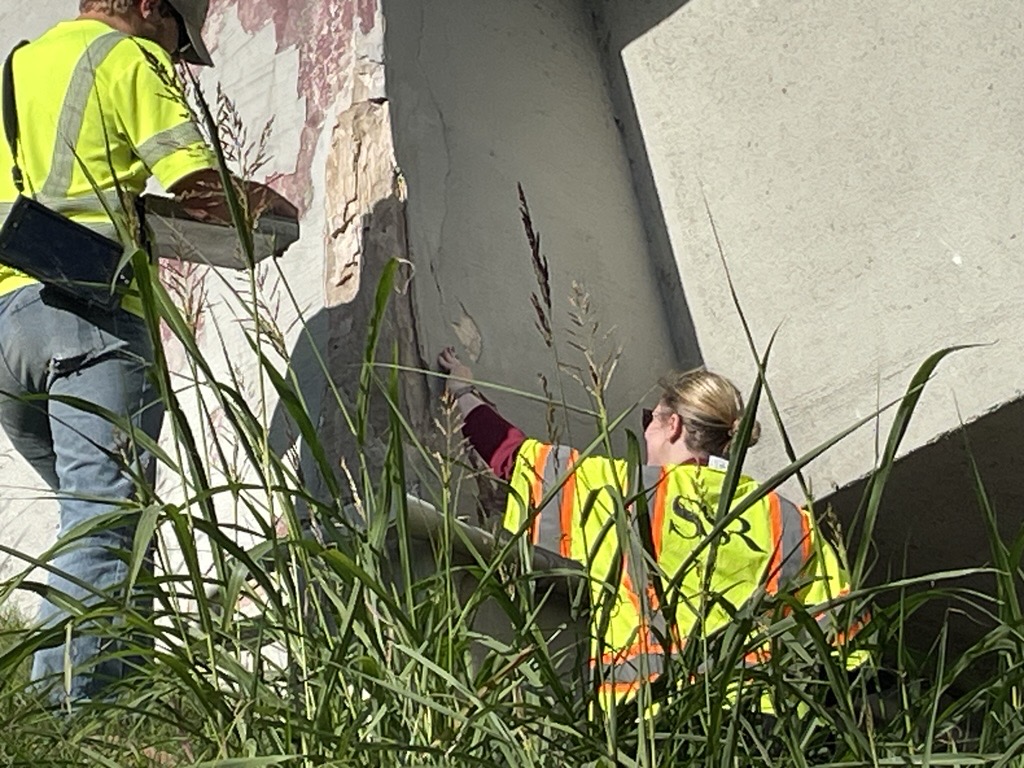
During these inspections, we document required photographs, verify site conditions, and evaluate any visible deficiencies. Each element receives a rating on a 0 through 9 scale, which contributes to an overall bridge rating that translates to Good, Fair, Poor, or Critical Condition.
A Highly Qualified and Regulated Inspection Team
Federal regulation outlines specific requirements for who can lead a bridge inspection. Every inspection must include at least two team members, one of whom must be a Team Leader with the designated qualifications.
There are three pathways to becoming a Team Leader:
- Licensed Professional Engineer (PE) with 6 months of bridge inspection experience
- Engineer Intern (EIT) with 2 years of inspection experience
- Non‑engineer personnel with 5 years of safety inspection experience
- All must complete and pass the National Bridge Inspection Standards (NBIS) course, renewing every five years.
At SSR, we’ve grown our capacity by adding new Team Leaders and mentoring junior staff who want to enter the bridge inspection profession. This investment not only strengthens our inspection program but also supports TDOT’s long‑term workforce needs as demands continue to rise.
More Than Field Work: The Reporting Process
The field work requires navigating numerous safety hazards, from wild animals to traffic, and climbing roadway embankments and ladders to access every element of the structures. After every inspection, the next phase of the work is to document the field observations so that TDOT can make informed decisions about their assets.
A few key expectations:
- Fair or Good bridges: final report due within 30 days
- Poor bridges: draft report due within 14 days
- Bridges with posting deficiencies: must be reported within 5 days
- Critical findings: must be reported within 48 hours
The reports undergo TDOT review before being finalized and delivered to bridge owners, such as municipalities or counties, who are then responsible for repairs.
While our contract focuses strictly on inspection, the insights we provide often help agencies prioritize maintenance and long‑term planning—critical for aging infrastructure and limited repair budgets.
Coordinating with TDOT and Local Governments
Bridge inspection is not as simple as “show up and inspect.” It involves significant coordination:
- Scheduling based on bridge inspection dates, which are based on Federal standards
- Aligning inspections with TDOT’s traffic control availability
- Coordinating lane closures in urban areas
- Ensuring safe access to the inspection site
TDOT frequently supports inspectors on “on‑system” bridges (those on state routes or in urban areas) by providing traffic control or bucket truck access when needed.
Because many of Region 4’s bridges are rural and smaller, some inspections are simpler—but they’re never casual and never unplanned.
The Impact of Our Work
Bridge inspection is often a quiet, unseen effort, but its impact is enormous. In Tennessee and across the country, infrastructure maintenance is an ongoing challenge. Many agencies struggle to proactively repair structures as quickly as deficiencies develop. That makes accurate, timely inspection data indispensable.
Our job is to help owners understand:
- What needs attention
- How conditions are changing
- Which bridges may require immediate action
Ultimately, we’re there to help prevent failures, extend service life, and most importantly, protect the traveling public.
Looking Ahead
As TDOT continues to expand its use of modern tools—such as drone imagery to supplement visual inspections—the industry is evolving alongside it. While drones can never replace hands‑on inspections, they provide valuable additional insight, particularly for larger or hard‑to‑access bridges.
Certain structures, however, still require hands‑on inspections, which place inspectors within arm’s reach of critical components. These bridges contain non‑redundant elements, meaning the failure of a primary steel member in tension could compromise the entire structure. As a result, these inspections are more intensive and require specialized certification. As part of SSR’s commitment to continuing education in the bridge inspection industry and maintaining our ability to be responsive, we currently have two Team Leaders with this NSTM certification on staff in Tennessee.
We also perform emergency inspections for local municipalities when bridges are struck by vehicles or are impacted by flood events. These inspections are outside of the routine in-service inspections and provide a necessary lifeline when extraordinary events occur.
A Final Thought
Most people drive across bridges without ever considering the engineering, documentation, and safety processes that keep them open. Our team takes pride in performing this highly technical and impactful work—quietly working to ensure that every driver has a safe trip across.