
Baptist Hospitals of Southeast Texas
Beaumont, Texas
SSR’s structural team supported the creation of a resilient, purpose‑built medical office building that strengthens access to vital healthcare services for the community.
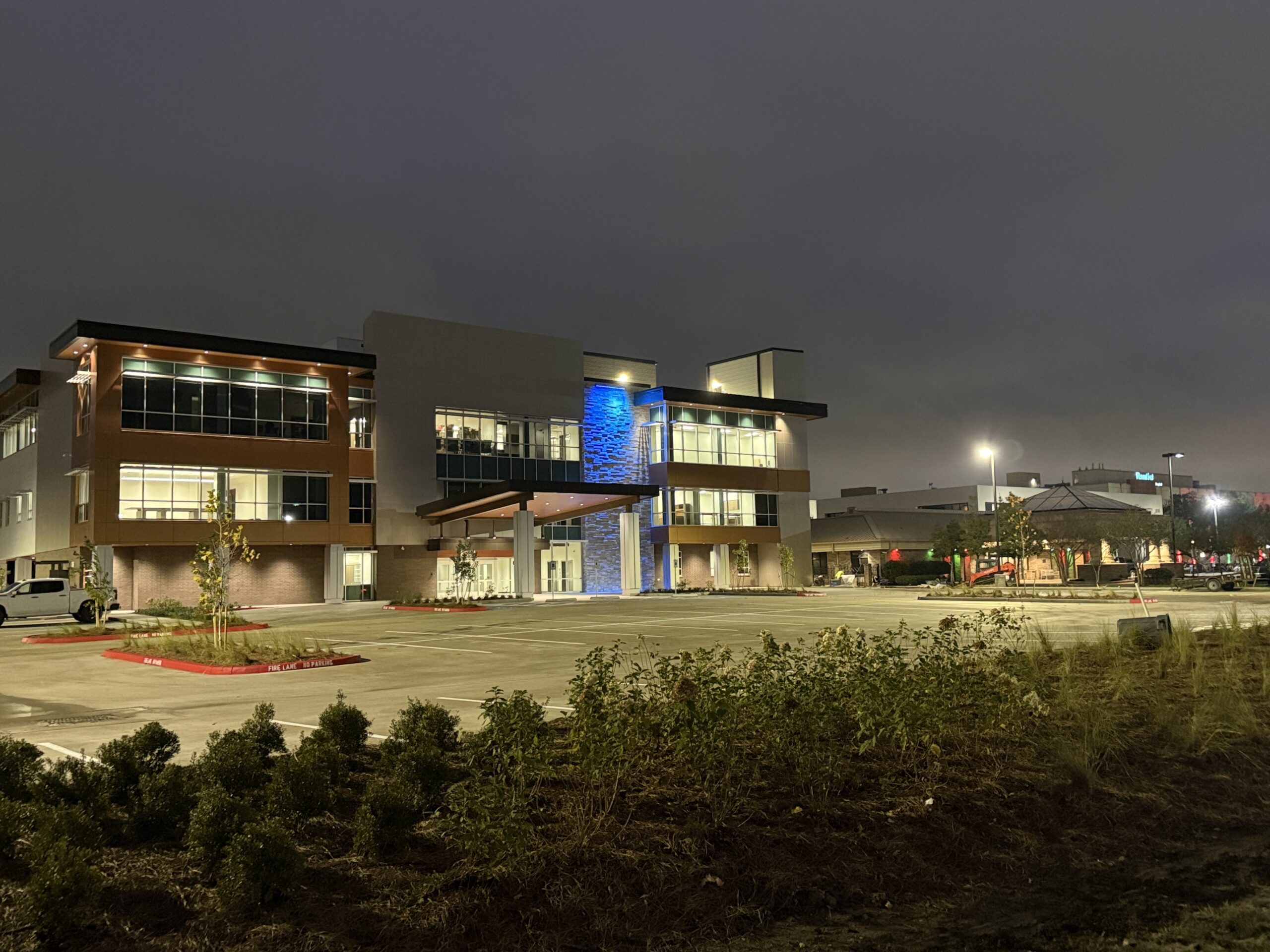
SSR provided structural engineering services for a new three‑story medical office building (MOB) and cancer treatment center for Baptist Hospitals of Southeast Texas in Beaumont, Texas. The project is one of the structural team’s first ground‑up healthcare facilities and included several technically complex components that made it both challenging and uniquely rewarding.
Project Scope & Unique Facility Components
A defining feature of the project was the inclusion of a linear accelerator (Linac) suite. This specialized treatment area required:
- Extremely thick shielding walls, ranging from 2.5 feet to 6 feet thick, to safely contain radiation.
- A heavily reinforced concrete roof forming a near “concrete bunker.”
- A concentrated and unusually heavy structural load that significantly influenced the foundation design.
The Linac was located on the ground floor, but its substantial weight required tightly spaced foundations and more intensive reinforcement than the rest of the building.
The exterior design also contributed structural challenges. The building incorporates:
- Floor‑height curtain walls across large portions of the façade.
- A 10‑foot‑tall parapet, much taller than typical parapets (usually around 2 feet), effectively creating a freestanding exterior wall at roof level.
Both features demanded careful design to ensure stability and performance under coastal wind pressures.
Foundation Design & Geotechnical Challenges
The project is located in southeast Texas, an area known for poor soil conditions, which heavily influenced the structural approach.
Early in design, SSR developed a preliminary foundation system using belled piers, based on limited geotechnical borings performed around an existing building on the site. However, once that building was demolished and full borings were completed, the soils report revealed significantly lower allowable bearing pressures than originally reported.
This required a complete redesign of the foundation system. As a result, our team:
- Transitioned from belled piers to deep foundations using auger cast piles.
- Had additional coordination with the contractor and owner to reprice the revised system, as early pricing had been based on the initial design.
The redesign became one of the key structural challenges and learning experiences of the project.
Coastal Environment & Windstorm Certification
Beaumont’s coastal location introduced heightened environmental loads, including significantly higher design wind speeds. For comparison, Memphis buildings are typically designed for wind speeds of 115 mph, whereas this project required design for 137 mph. This substantial increase drove the need for enhanced design attention to debris impact on exterior assemblies as well as additional structural reinforcement to withstand high‑wind pressures.
Because of its coastal exposure, the owner chose to pursue Texas Department of Insurance (TDI) Windstorm Certification, a voluntary but valuable process that can help secure certain insurance coverages. SSR handled all windstorm‑related design and inspections, marking the first time the structural group had undertaken and successfully completed this certification process. The certification required four prescribed site inspections at key stages of construction.
Coordination & Project Delivery
The structural team worked closely with SSR’s MEP team, who jointly pursued the project with the architect. This internal partnership:
- Streamlined design coordination.
- Enabled cross‑discipline modeling checks (e.g., avoiding ducts through beams).
- Improved overall project efficiency and communication.
Because the majority of design partners were local to Texas, site coordination was also a key aspect.
Project Completion
With construction complete and the facility now open, the Beaumont MOB is already beginning to serve the community it was designed for. The new cancer treatment center provides expanded access to critical healthcare services in the region, offering patients a modern, resilient, and purpose‑built environment for care. Its thoughtful structural design, developed to meet the challenges of a coastal climate, complex medical equipment, and rapidly evolving site conditions, now supports a space that will benefit patients, families, and providers for years to come. The building’s opening marks a meaningful milestone not just in the project’s timeline, but in enhancing healthcare access for the Beaumont community.