
Designing for Comfort and Care: SSR Enhances Patient and Family Experience in Healthcare Settings
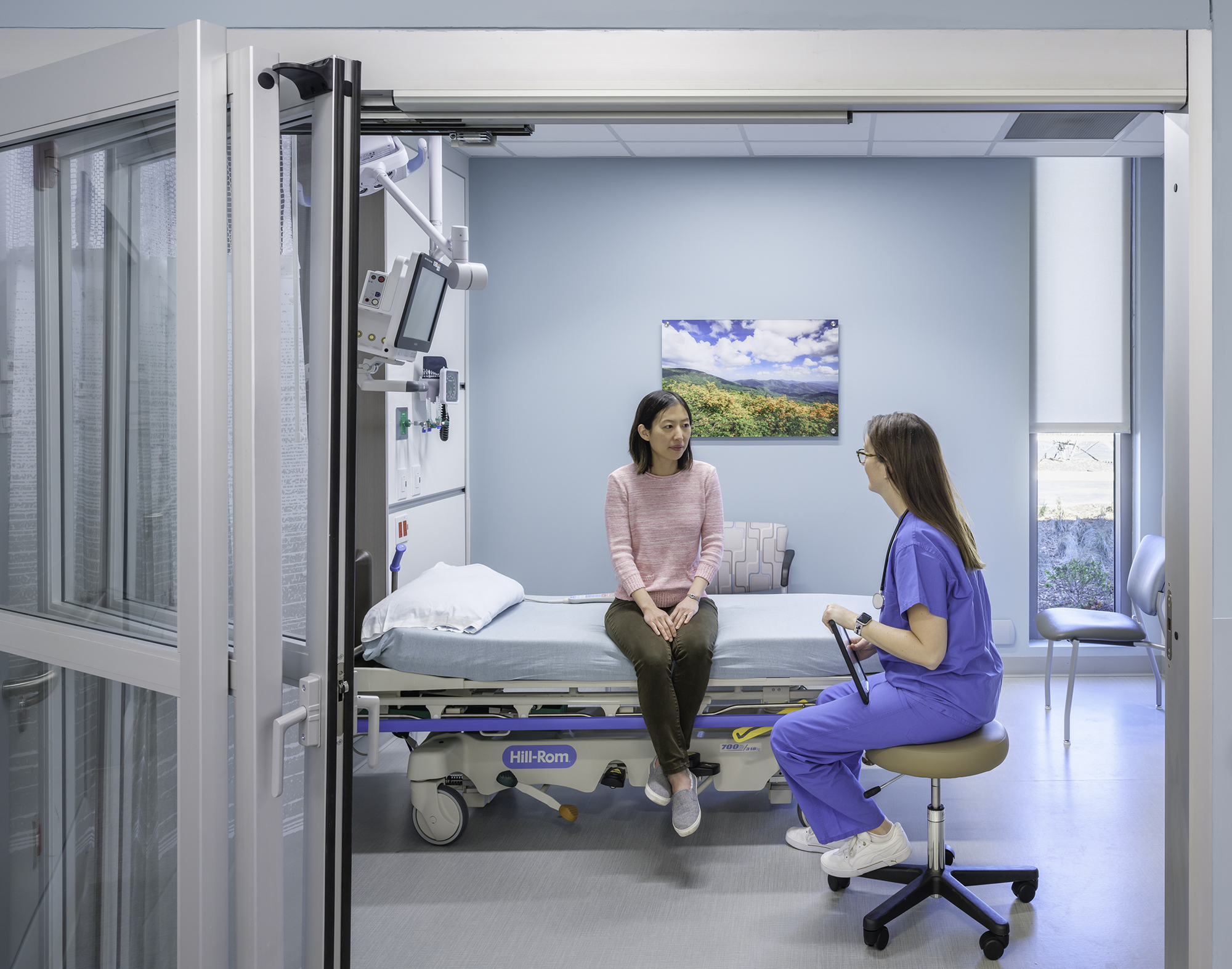




Healthcare environments are more than buildings—they are spaces where healing, comfort, and emotional well-being intersect. At SSR, we believe that every design decision should positively impact the patient and family experience. From early design discussions to construction and occupancy, our multidisciplinary approach ensures that healthcare facilities are not only functional but supportive of those who use them.
Early Design Discussions: Setting the Vision for Experience
Early collaboration is key to creating healthcare environments that truly serve patients, families, and staff. By bringing owners, architects, engineers, and clinical teams together at the outset, we establish a shared understanding of space use, operational goals, and patient experience priorities. This alignment ensures that systems, layouts, and workflows are designed for efficiency and comfort. Our proactive approach not only enhances healing environments but also anticipates future needs—making facilities adaptable, resilient, and easier to maintain over time.
Going Beyond Code Minimums
SSR begins by collaborating with owners and architects to identify opportunities that elevate patient care. A prime example is Monroe Carell Jr. Children’s Hospital at Vanderbilt, where SSR designed the transplant wing with HEPA filtration and positive pressurization—far exceeding minimum code requirements. This allowed immunocompromised children and their families to safely leave their rooms and walk the halls, transforming isolation into mobility and comfort.
Health & Wellness Standards
Early planning incorporates WELL Building and LEED criteria, ensuring thermal comfort, air quality, and daylighting strategies exceed ASHRAE standards. These foundational decisions create environments that promote healing and reduce stress for patients and families.
Engaging Staff Users
Bringing staff into the design conversation early ensures spaces are optimized for workflows and clinical efficiency. SSR works to make sure nurses and caregivers are confident in the layout, equipment, and technology. We prioritize intuitive systems and provide backup plans so staff aren’t distracted by troubleshooting, allowing them to focus on delivering exceptional care.
Design Phase: Integrating Comfort, Control, and Technology
The design phase is where vision becomes reality. At this stage, SSR integrates technical expertise with user-centered thinking to ensure every detail supports comfort, safety, and efficiency. By collaborating closely with architects, owners, and clinical teams, we translate goals into tangible solutions—optimizing systems, layouts, and technology for seamless workflows. Our approach balances innovation with practicality, creating spaces that enhance healing while remaining adaptable for future needs.
Thermal Comfort and Envelope Optimization
SSR’s Building Optimization and MEP teams collaborate on thermal studies and CFD analysis to optimize air distribution and facade design. This ensures caregivers seated near windows experience the same comfort as patients. In colder climates, SSR adds perimeter radiant panels or separate temperature zones for family areas, as seen at Children’s Mercy in Kansas City.
Lighting for Wellness: Circadian Rhythm and Healing Benefits
SSR incorporates circadian rhythm lighting to support natural sleep-wake cycles and promote healing. Research shows NICU babies exposed to circadian lighting grow faster and leave intensive care sooner. For clinical needs, care staff can override the system with a single touch for exams or procedures, then return to the circadian sequence seamlessly.
Intuitive Controls for Patient Empowerment
Beyond wellness, SSR provides intuitive lighting controls that give patients—especially children—the ability to personalize their environment. At Children’s Medical Center Plano, color-changing lights accessible via touchscreen or mobile devices allow patients to adjust lighting to fit their mood or preference, creating a sense of comfort and control during their stay.
Building Envelope Performance and Comfort
The effective design and maintenance of the building envelope’s thermal, moisture, and air barriers help enhance user experience and ensure comfort for both patients and families. The specification of high-performance fenestration design and wall systems is increasingly an important consideration in healthcare facilities. Understanding best practices for design, construction, commissioning, and maintenance of these systems is a differentiating strength of our Building Enclosure team.
Water Quality and Infection Control
SSR addresses water safety with advanced filtration systems, exceeding EPA standards to prevent issues like Legionella and contamination—critical for transplant units and immunocompromised patients.
Technology Integration for Stress Reduction
SSR’s Technology and Innovation teams design smart spaces that simplify navigation and reduce anxiety. Examples include:
- Smart Parking Garages with wayfinding apps and lighting cues to ease arrival.
- Tech Bars and roaming “tech-sperts” to assist families with in-room technology.
- Patient Engagement Platforms that centralize controls for lighting, temperature, and entertainment, reducing frustration and empowering patients.
Construction and Occupancy: Delivering Peace of Mind
The construction phase is where planning and design come to life. SSR’s role during construction and occupancy focuses on ensuring that every system operates as intended and that patient safety and comfort remain uncompromised. We work closely with contractors and facility teams to manage logistics, minimize disruptions, and validate performance through commissioning. This proactive involvement provides peace of mind for owners and sets the stage for a smooth transition into a fully functional, patient-centered environment.
Renovation in Active Hospitals
For additions or renovations, SSR prioritizes patient safety and comfort by coordinating shutdowns, infection control, and logistics with facility teams. This minimizes disruption in 24/7 care environments.
We also proactively design new facilities so that MEP systems are located and routed to minimize interaction with patient spaces. This approach allows easier access to these systems when future renovations or additions arise, reducing disruption and maintaining a healing environment.
Commissioning for Confidence
SSR’s commissioning team validates that systems perform as intended, giving owners peace of mind before occupancy. While traditionally focused on MEP and life safety, SSR has the inhouse capability to commission the building’s enclosure, med gas, and nurse call systems.
Post-Occupancy Feedback and Continuous Improvement
SSR advocates for post-occupancy evaluations to gather insights from staff and families, ensuring future designs continue to evolve toward better experiences.
Looking Ahead: Designing for Flexibility and Innovation
Healthcare is evolving rapidly, and SSR helps clients prepare for a future that is still taking shape. Owners are increasingly looking outside traditional healthcare for inspiration—some even hiring experience officers to reimagine patient journeys. Our team is ready to collaborate with these leaders, bringing ideas from other markets such as sports and education to create environments that feel intuitive, engaging, and adaptable.
Flexibility is key. We design infrastructure that supports care delivery models we can’t yet predict, ensuring spaces can accommodate emerging technologies and new approaches to treatment. This includes enabling certain procedures, exams, and imaging to occur in the comfort of the patient room, reducing stress and minimizing patient movement throughout the facility. By planning for adaptability today, SSR helps healthcare organizations stay ahead of change and deliver exceptional experiences for decades to come.
Conclusion
From the first design conversation to the final system check, SSR’s multidisciplinary approach ensures healthcare environments are not only functional but deeply supportive of patient and family well-being. By integrating advanced engineering, thoughtful design, and innovative technology, SSR helps create spaces where healing happens holistically.