

Target Value Delivery: Designing Projects for Cost Certainty and Long-Term Value


Few industries face the same level of complexity, cost pressure, and operational demands as healthcare. Hospital systems and medical campuses must balance capital budgets, rapidly evolving technologies, patient experience and outcomes, stringent regulatory requirements and long-term facility performance, all while navigating unprecedented construction market volatility. In this environment, owners need greater confidence that projects can be delivered without sacrificing quality, functionality, or future flexibility.
Traditionally, construction projects followed a design-bid-build process: architects and engineers developed designs, costs were estimated along the way, and owners often didn’t know whether they were truly on budget until contractor pricing was complete. Today, with escalating material costs, labor shortages, supply chain disruptions, and ongoing market volatility, that approach creates significant risk.
Due to these challenges, Target Value Delivery (TVD) has become an increasingly effective way to execute projects. By aligning budget, program, and design decisions from the earliest stages of planning and design, healthcare organizations can make informed investments that preserve both project goals and long-term value. That said, there are still many lessons learned to be effective with this approach.
Moving Beyond Traditional Value Engineering
Traditional value engineering often begins after a project is already significantly designed, and pricing reveals a budget gap. Project teams are then forced to identify savings opportunities, which can result in redesign efforts and compromises that gradually move a project away from its original vision.
The result is often “death by a thousand cuts,” a series of small cost-reduction decisions that gradually erode the original vision for the project. The impact of major changes to reduce costs often impacts the project schedule, which is often a key goal for the project. One example of this is shifting from consolidated mechanical rooms on interstitial floors to individual zones of mechanical rooms distributed throughout the hospital. The re-programming effort to make this change would often require a partial ‘re-do’ of the schematic design and design development phases to incorporate significant floorplan adjustments. This may include additional user group meetings with hospital personnel to incorporate the changes.
Target Value Delivery turns that process on its head. Instead of designing first and cutting later, teams establish cost targets early and make decisions around those targets throughout design and construction. The goal is not simply to reduce costs, but to ensure every dollar invested supports the owner’s highest priorities.
Why Target Value Delivery Matters in Healthcare
Healthcare facilities are uniquely sensitive to design decisions. Choices surrounding air handling systems, central utility plants, redundancy requirements, infection control measures, and future expansion capabilities can significantly affect both initial construction costs and long-term operational performance.
At the same time, mechanical, electrical, plumbing, and technology systems represent a substantial portion of the overall construction costs. According to SSR’s project data, MEP and technology system’s infrastructure can account for roughly half of a healthcare project’s construction budget, making them one of the most influential factors in delivering a project within budget.
Because of this, healthcare owners gain tremendous value when contractors, engineers, and architects collaborate early in the planning process, providing real-time insight into costs before major design decisions are finalized.
Bringing Cost Certainty to the Design Table
The cornerstone of successful Target Value Delivery is early and ongoing collaboration.
When contractors and cost estimators are brought into a project during planning and schematic design, owners receive more accurate information about how specific decisions affect project costs. Rather than waiting until design development or construction documents are complete, project teams can evaluate alternatives early and avoid rework and cost escalation due to schedule delays.
Target Value Delivery is understanding where the risk is early and often throughout the project. It helps the design team understand the financial impact of decisions without losing sight of the overall project goals.
This collaborative approach can also identify situations where the project program itself exceeds the available budget before extensive design work begins. Rather than pursuing expensive redesigns later, owners gain the opportunity to weigh the options and make informed adjustments at the outset.
Focusing on the Decisions That Matter Most
A common misconception is that cost management simply means selecting less expensive equipment. While equipment selection can play a role, Target Value Delivery often influences much larger decisions earlier in the process. For healthcare facilities, there are often multiple viable mechanical system options available. Central utility plants, chilled water systems, VRF technologies, and air-cooled systems all carry different first costs, space requirements, maintenance considerations, and operational implications. Through TVD, these options can be evaluated against established targets before significant design effort is invested. This proactive process allows project teams to determine which solutions fit within the owner’s budget while still supporting long-term building performance.
The result is fewer surprises, reduced redesign effort, shorter schedule, and more confidence that the final design aligns with both financial and operational goals.
Preserving Quality While Managing Costs
One of the greatest strengths of Target Value Delivery is that it changes the conversation from cost cutting to value creation.
For healthcare organizations, this distinction is critical. Decisions about system reliability, maintainability, and patient care environments have consequences that extend decades beyond construction. A successful TVD process helps owners understand where savings can be achieved and where investments should be protected.
Healthcare Experience Drives Better Decisions
Effective Target Value Delivery relies on accurate and current market intelligence. That’s where SSR’s healthcare experience provides a significant advantage.
Because our teams continuously design and deliver healthcare facilities across the country, we maintain current knowledge of construction costs, market trends, and system performance. This real-world experience helps us understand not only where meaningful savings can be found, but also the long-term implications of those decisions.
By bringing that insight to the table early, SSR helps owners make informed choices that balance budget realities with operational priorities.
Delivery Doesn’t End at Design
Perhaps the most overlooked aspect of Target Value Delivery is the final word in the name: Delivery. Pricing, procurement challenges, and market conditions continue to evolve throughout the life of a project. As a result, it’s critical that the general contractor and major subcontractors are engaged and at the table to help set specific target values, provide recommendations on how to achieve them, and track the values through procurement and construction. Setting a target goal without a means to get there is often not effective, and value management must remain an ongoing effort from planning through substantial completion. TVD isn’t a project phase or process that stops; it needs to continue through the end of the project because things change monthly from a pricing and procurement standpoint. Maintaining focus on the owner’s goals and what they value throughout project delivery allows teams to identify new opportunities, respond to changing market conditions, and ensure owners continue receiving the greatest return on their investment. Additionally, some TVD targets can be met early and a deeper dive into those components may bear even more savings to overcome other cost categories that struggle to hit their targets.
Don’t Skip (or skimp on) the ‘Assumptions and Clarifications’ Discussion
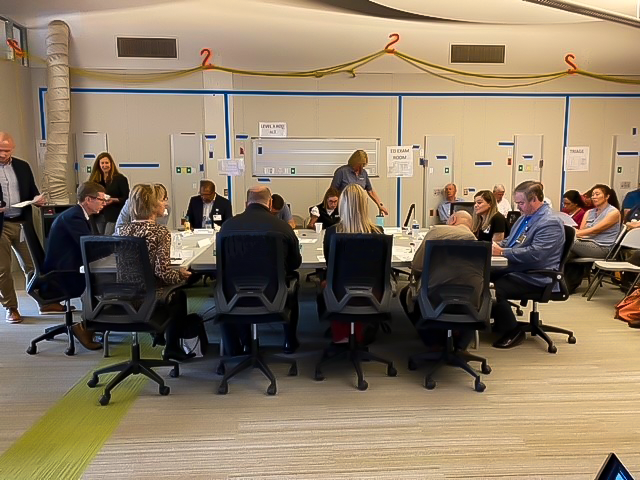
Large projects involve a lot of stakeholders with different levels of expertise, concerns, and desires. The key stakeholders should be involved in the TVD discussions. When TVD decisions are made, the documentation process and taking time to sit down and talk through the approach to meet each TVD goal is critical. Specific details about products, materials, and where the decision applies (i.e. project wide vs. specific areas) need to be documented and signed off by the key stakeholders. The individual(s) doing the documentation needs to have a thorough understanding of the variables and decisions being made. Once documented, that information needs to be shared with the stakeholders, estimators, installers, and operators to keep everyone aligned on project expectations, which are often a conglomeration compromise of all the parties involved. Missing this step can create misunderstanding, mis-execution, change orders, delays, and undesired project outcomes.
Challenge the Status Quo
Stakeholders often base their desires and decisions on past experiences. One of the great benefits of the TVD process is listening to all the expertise in the room and being flexible enough to accept alternate products, systems, or approaches to keeping the project in budget. It’s common to get referrals from within the OAC team where the proposed solution has been applied at another facility to help ease concerns. An open mind and flexibility within the TVD process is critical and should be considered when selecting the project stakeholders.
The SSR Difference
At SSR, we believe engineers should do more than design systems; we strive to serve as trusted advisors throughout the project’s lifecycle.
By combining healthcare-specific expertise, current cost intelligence, best practices, and early collaboration with owners, architects, and contractors, we help clients make smarter decisions before cost challenges become project setbacks. We also advocate for bringing engineers into project planning and associated budget discussions, allowing owners to leverage our knowledge of system costs, operational energy costs, market conditions, and long-term operational impacts from the very beginning.
Target Value Delivery works best when owners, design teams, and contractors, are aligned around a common goal from the beginning. With the right team at the table, healthcare organizations can achieve greater cost certainty, reduce redesign effort, and create facilities that deliver lasting value for patients, caregivers, and their communities.