


Value Matters: Reimagining Healthcare in an Era of Resource Constraints
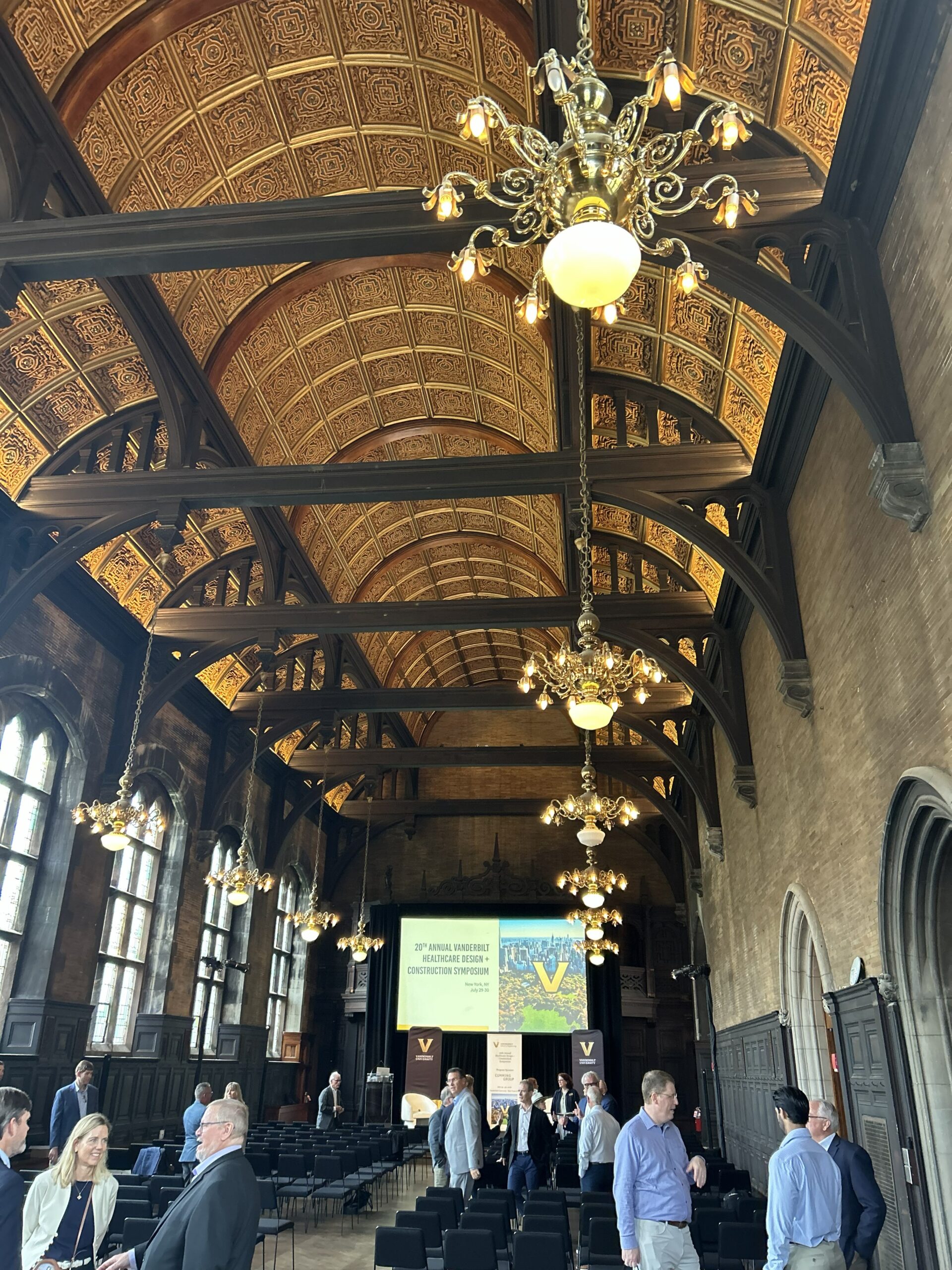

In July, SSR joined industry leaders in New York City for the annual Vanderbilt University Healthcare Design & Construction Symposium to discuss the challenges and opportunities shaping healthcare delivery.
A consistent theme emerged at the symposium: as financial and human resources become more limited and less predictable, healthcare providers must define value more intentionally in order to carefully prioritize investments and execute projects that increase access to care, improve patient outcomes, and support sustainable care delivery.
For the AEC community, this moment requires us to think deeply and creatively as we advise healthcare owners. As organizations evaluate strategies and make capital decisions, AEC professionals have an opportunity to bring practical insight and creative solutions to inform investment decisions that support and sustain holistic care models.
Amid these constraints, we must remember that empathy is at the center of patient care value. Healthcare facilities are full of people that are experiencing some of the most difficult days of their lives. The built environment, the systems that support it, and the decisions made during planning and design all influence this experience.
In the coming months, we’ll explore four key themes in greater detail that impact value:
- Access to care
- Workforce resiliency
- Planning in an uncertain world
- Standardization vs. flexibility
Access to Care
Improving access to care will require more than simply increasing the number of care sites. This is especially important in rural communities, where needs vary widely and the right solution is not always a conventional hospital. Flexible clinics, mobile services, virtual care, transportation solutions, and regional partnerships will all play a role in expanding access to care. We will continue to see ambulatory network expansion to meet these needs.
Federal funding opportunities, including those associated with the One Big Beautiful Bill Act, will also influence these strategies in rural and other areas. Rural healthcare is not a single category. Spoiler alert – Medicare classifies rural much broader than you think. Rural hospitals, critical access hospitals, regional providers, isolated communities, and non-urban markets each face different constraints and require a more flexible access model.
Workforce Resiliency
Workforce shortages are a multi-faceted constraint for healthcare providers. Owners must address both the limited availability of construction labor needed to build facilities and ongoing clinical staffing shortages. These challenges can contribute to staff burnout and increased reliance on contract or travel clinicians, resulting in higher labor costs, unstable cost structures, and potential impacts to long-term financial sustainability.
As a result, capital planning, resiliency planning, clinical workforce planning, and construction labor strategy must be considered together.
Manufactured components and prefabrication can serve as workforce strategies when healthcare owners evaluate them early and apply them appropriately. These approaches can help reduce field labor demands, improve schedule reliability, and support more predictable project delivery.
Planning in an Uncertain World
Healthcare providers must evaluate value beyond first cost, accounting for the unknowns of future reimbursement pressure, staffing shortages, rising operating costs, aging infrastructure, and evolving care models. Defining value before defining scope helps organizations make better decisions in the face of uncertainty.
Capital planning should move from static, project-by-project decisions to dynamic portfolio-based roadmaps. Healthcare organizations should evaluate capital across the full care network, consider the broader care ecosystem, integrate workforce planning, and scrutinize investments for their long-term impact.
Due to the increasingly changing nature of economic and regulatory assumptions, we expect to see master plans evaluated with more frequency than in the past.
Operational efficiency
Before expanding facilities, organizations should first identify the operational constraints affecting performance, such as throughput, scheduling, staffing, workflow, utilization, or service-line design.
Planners should prioritize Investments that improve productivity. Technology should extend people’s capacity, mitigate labor shortages, and improve operational efficiency.
Planning assumptions are also changing more quickly than before. Reimbursement uncertainty, coverage changes, inflation, construction escalation, drug and supply costs, aging infrastructure, and labor competition all require shorter-term planning cycles and more adaptable capital strategies.
Standardization vs. Flexibility
Healthcare organizations need a clear design and construction standards strategy. Poorly designed standards can replicate the wrong solution at scale, but endless customization can create inefficiency, cost escalation, and operational inconsistency. Standards should capture institutional knowledge, not just room dimensions or technical requirements.
The concept of the “last responsible moment” is important. Decisions should be made early enough to maintain progress, but late enough to preserve flexibility where future information may influence the best outcome.
Design for manufacturing should also be considered early in the planning stages and pursued only where it creates measurable value. When used appropriately, it can improve speed, quality, consistency, and labor efficiency.
Looking Ahead
The industry’s charge is not simply to build less. It is to eliminate work and space that do not create value, direct resources toward impactful outcomes, and deliver the remaining investment with greater speed, reliability, and adaptability. The buzz at the symposium reinforced the importance of scrutinizing investments and viewing from the lens of maximizing value.
Increased access to care, workforce resiliency, disciplined capital planning, and standardization are all shaping the future of healthcare facilities. In upcoming newsletters, we will explore each of these themes in more detail.