

East Bank Pump Station
Nashville, Tennessee
Integrated civil, structural, MEP, and controls expertise
supporting Nashville’s East Bank growth with speed, efficiency, and long-term flexibility.
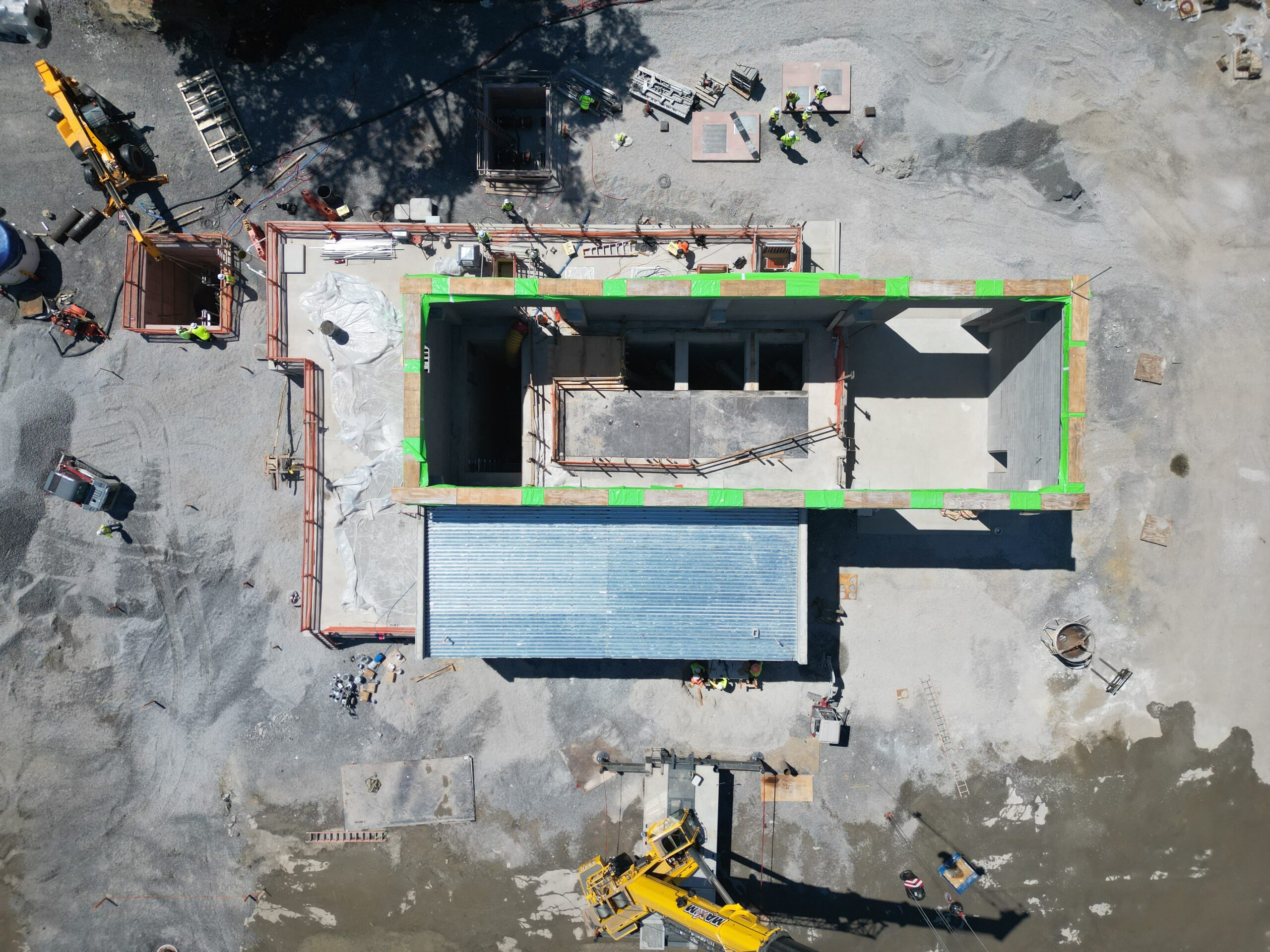
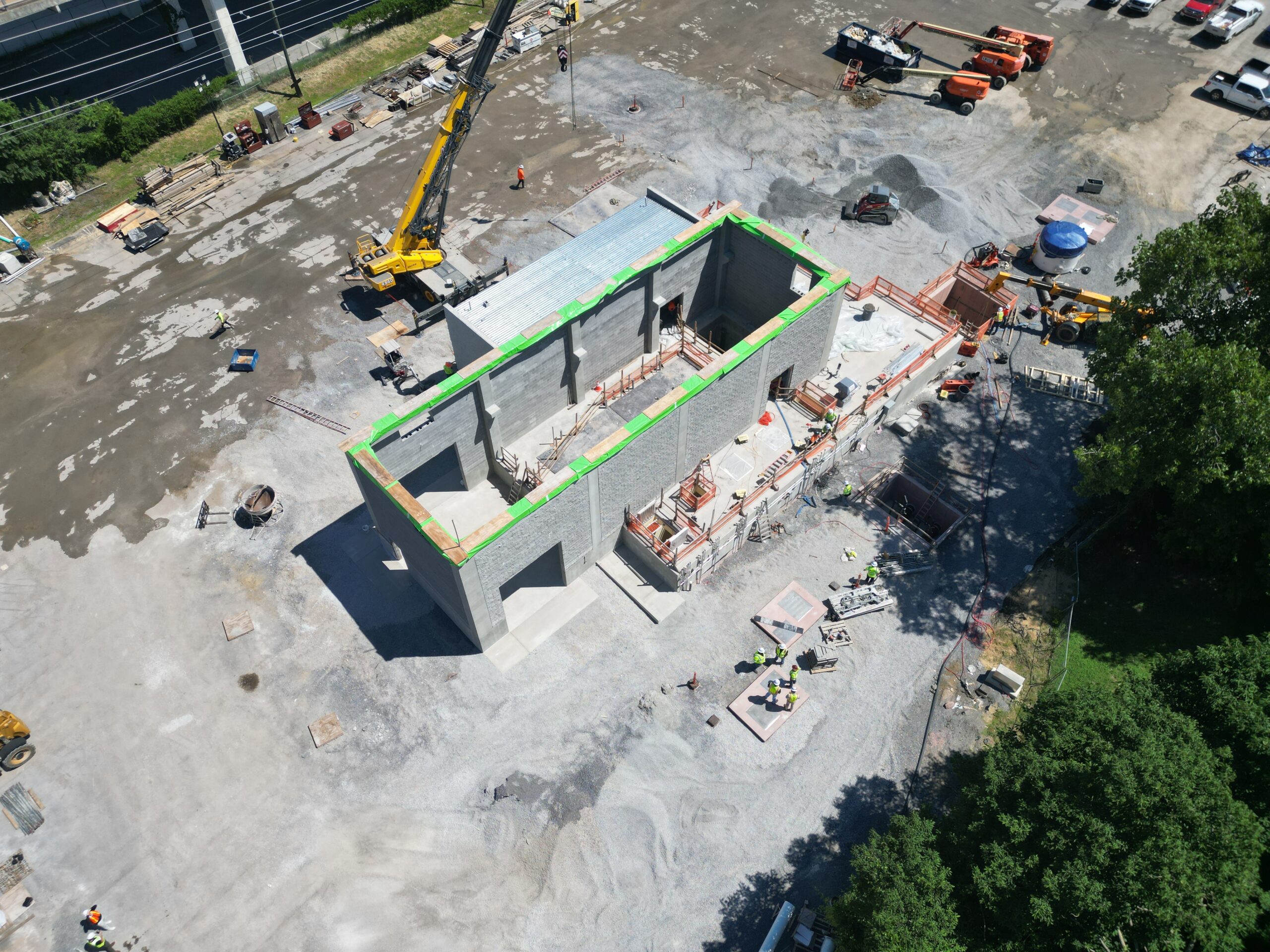
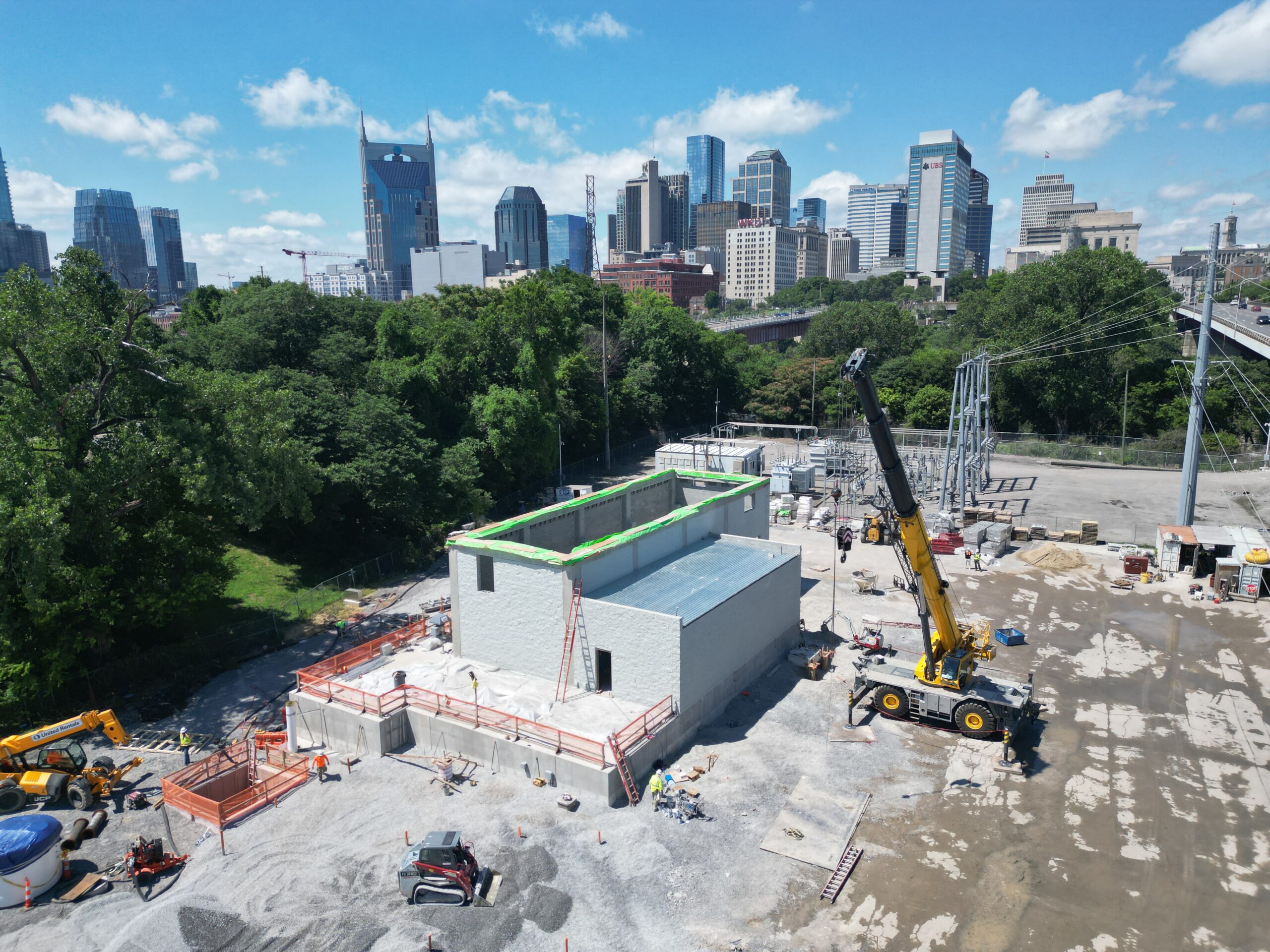
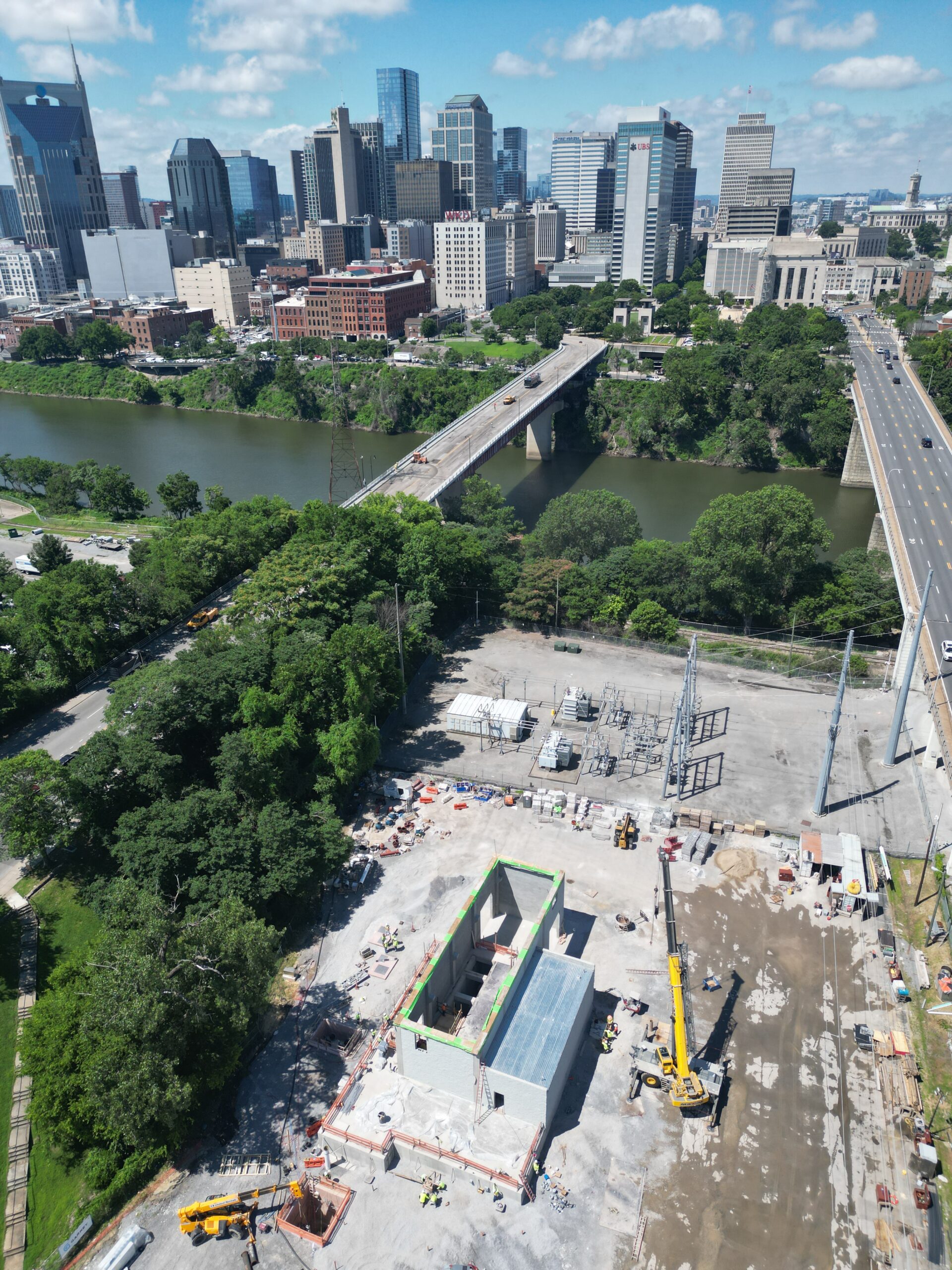
SSR is leading the design of a regional sanitary sewer pump station supporting Nashville’s transformative 550-acre East Bank development, including the new Nissan Stadium. Delivered through a design-build partnership, the project delivers a scalable, regional solution designed to meet both immediate demand and long-term growth.
Designed for a future buildout of 15 MGD, the pump station balances initial low-flow conditions with long-term peak demand through adaptable infrastructure and strategic equipment selection.
The facility includes a dry pit, submersible dry well, trench-style wet well, pump station building, dedicated electrical room, four dry-pit submersible pumps, bulk carbon odor control system, grinder vault, and variable frequency drives (VFDs). Parallel force mains connect the station to the existing Browns Creek Force Main, integrating the system into Metro Nashville Water’s broader wastewater network.
A key feature of the design is its built-in flexibility to accommodate future growth with minimal disruption. The pump station is initially configured to handle approximately 10 MGD but is designed to expand to 15 MGD through a straightforward equipment upgrade. Rather than requiring a major facility expansion, the system can achieve increased capacity by replacing a single pump, with all supporting infrastructure already designed to handle the higher flows. This forward-thinking approach minimizes future capital costs, reduces operational downtime, and allows Metro Water Services to scale capacity efficiently as development across the East Bank continues.
Individual Services
Civil Engineering: SSR’s civil team led master planning, site selection, and hydraulic modeling to define the pump station’s capacity and footprint. Through detailed flow studies, the team designed infrastructure capable of supporting both early-stage flows driven by the stadium and long-term development across the East Bank. Civil coordination also ensured placement of gravity lines and force mains aligned with future development, utilities, and evolving site conditions.
Structural Engineering: Working on an accelerated schedule, SSR’s structural engineers delivered early, highly detailed design packages to support phased construction and early procurement. By locking in critical dimensions and layouts early, the team enabled downstream disciplines to advance with confidence while maintaining constructability and long-term durability.
MEP Engineering: SSR’s MEP team focused on power distribution, equipment coordination, and system reliability, aligning closely with civil and process requirements. Early engagement in equipment selection and procurement ensured long-lead components, such as pumps and electrical systems, were integrated efficiently to meet aggressive project milestones.
Instrumentation & Controls (I&C): SSR provided oversight of system integration, managing the controls integrator and ensuring seamless alignment between process design and operational performance. This approach enhances system reliability, supports Metro’s operational standards, and positions the facility for long-term maintainability.
Collective Impact
By operating as a fully integrated team, SSR delivered a highly collaborative “SSR One” approach that accelerated decision-making and reduced project risk. Real-time coordination across civil, structural, MEP, and controls disciplines allowed the team to respond quickly to evolving site conditions, stakeholder inputs, and aggressive schedule demands.
Working under an alternative delivery model, SSR partnered directly with the contractor to accelerate design and construction, advancing work prior to full permitting and issuing early procurement packages for long-lead equipment. This approach, combined with weekly coordination and real-time problem-solving, enabled the team to maintain an aggressive schedule aligned with the stadium’s early 2027 opening.
SSR’s prior experience with the Browns Creek Force Main and deep understanding of Metro’s standards further strengthened permitting, design integration, and decision-making. The result is a compact, future-ready facility that maximizes developable land, supports critical infrastructure for one of Nashville’s most significant developments, and delivers long-term value through adaptable, cost-effective design.